The demand for computing power has never been greater. With the rapid expansion of artificial intelligence (AI), data analysis, and other computation-intensive tasks, high-performance computing (HPC) has become the backbone of progress in many fields. However, with more powerful processors comes an inevitable challenge: heat. Managing the excessive heat generated by advanced processors is crucial for maintaining performance and longevity. Enter liquid cooling, a technology that’s not new but is becoming increasingly vital for the future of high-performance computing.
The Problem with Heat in High-Performance Computing
Modern processors, whether they’re found in personal computers, data centers, or supercomputers, are far more powerful than those of just a decade ago. These processors contain billions of transistors packed into ever-smaller spaces, pushing the limits of Moore’s Law. While this miniaturization brings remarkable gains in processing power, it also leads to one of the biggest enemies of computational efficiency: heat.
As processors work harder, they generate more heat. If not properly managed, this heat can cause various problems, from throttling performance to physical damage. Excess heat can cause thermal throttling, where the processor automatically slows down to prevent overheating, reducing performance when it’s needed most. Over time, excessive heat can also shorten the lifespan of the components.
The traditional solution to this has been air cooling, which involves heat sinks and fans to dissipate the heat away from the processor. However, as we push computing power to its limits, air cooling is increasingly becoming inadequate. Fans and heat sinks can only remove so much heat, and they take up valuable space inside machines. In the most extreme cases, air cooling simply can’t keep up, leading to inefficiencies, noise pollution, and higher energy costs.
In high-performance computing environments, such as data centers, these challenges are even more pronounced. The cost of cooling massive arrays of servers can make up a significant portion of operational expenses, and traditional air cooling systems often struggle to keep up. As a result, more advanced solutions are necessary, and liquid cooling is proving to be a leading contender.
How Liquid-Cooled Processors Work
Liquid cooling is an excellent option for businesses looking to improve the efficiency of their systems, especially when paired with managed IT services to ensure optimal performance. At its core, the concept of liquid cooling is relatively simple. Instead of relying on air to remove heat, a liquid—usually water or a specialized coolant—is used to absorb heat directly from the processor and other critical components. The liquid is then circulated through a radiator or heat exchanger, where it releases the heat and cools down before being cycled back through the system.
Liquid cooling is more effective than air cooling because liquids have a much higher thermal conductivity than air. This means they can absorb and transfer heat more efficiently. A liquid cooling system typically includes several key components: a water block, tubing, a pump, and a radiator. The water block is placed on top of the processor, where it absorbs the heat generated by the chip. The pump circulates the liquid through the system, while the radiator helps dissipate the heat into the air.
Unlike air cooling, which relies on convection and airflow to carry heat away from components, liquid cooling offers direct thermal management, allowing for more precise control over temperature. This increased efficiency in heat removal means that processors can run at full capacity for extended periods without the risk of overheating or throttling.
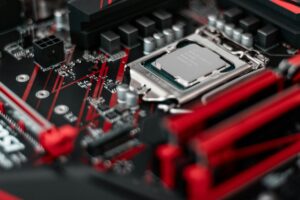
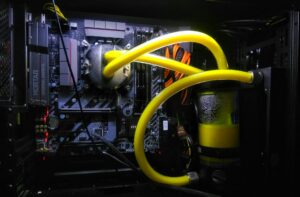
There are also variations in liquid cooling systems. Some are closed-loop systems, which are pre-assembled and sealed, requiring little to no maintenance. These are often found in consumer-grade liquid cooling solutions, such as those used in gaming PCs or workstations. On the other hand, open-loop systems, typically found in high-end and custom-built setups, allow users to add or modify components, providing even greater flexibility and cooling efficiency.
Advantages of Liquid Cooling in High-Performance Computing
The benefits of liquid cooling in high-performance computing are substantial. The most obvious advantage is improved thermal performance. By removing heat more efficiently than air, liquid cooling allows processors to maintain higher clock speeds for longer durations, which is essential in environments where performance is critical. This means that liquid-cooled systems can often deliver better overall performance than their air-cooled counterparts.
Another major advantage is noise reduction. Traditional air cooling systems rely on fans to move air across heat sinks, and as systems generate more heat, the fans must spin faster, generating more noise. In contrast, liquid cooling systems can operate more quietly, as the fans on the radiator typically spin at lower speeds than those on air-cooled systems. This makes liquid cooling particularly attractive in environments where noise pollution is a concern, such as office settings, laboratories, or data centers.
Additionally, liquid cooling can also lead to space savings. Air cooling solutions, especially those in high-performance systems, require large heat sinks and multiple fans, taking up valuable internal space. This can limit how compact a system can be, especially in environments where space is at a premium, such as data centers. Liquid cooling systems, by contrast, are often more compact and can be configured more flexibly, allowing for denser computing setups.
Lastly, energy efficiency is another compelling benefit. Air conditioning and traditional cooling methods in data centers are notorious for their energy consumption. In contrast, liquid cooling systems, by efficiently managing heat, can reduce the need for extensive air conditioning, leading to lower energy costs. Given the growing emphasis on sustainability and green technologies, the energy savings provided by liquid cooling can help organizations reduce their carbon footprint and move towards more environmentally friendly operations.
Challenges and Considerations
While liquid cooling offers significant advantages, it’s important to recognize the challenges and considerations that come with adopting the technology. One of the most prominent concerns is cost. Liquid cooling systems are generally more expensive to purchase and install than traditional air cooling systems. The higher cost is due to the specialized components, such as pumps, radiators, and water blocks, as well as the increased complexity of the system. As an expert in cooling technologies, Cheyanne Mallas emphasizes the need for careful evaluation before making the switch.
In addition to the initial cost, there is also the issue of maintenance. While closed-loop systems require little upkeep, open-loop systems may need regular maintenance to ensure that the coolant levels are adequate, and that there are no leaks or clogs in the system. Leaks, in particular, are a significant risk in liquid cooling setups. If not properly managed, a leak could cause damage to the components, leading to costly repairs or downtime.
There’s also a learning curve associated with setting up and managing liquid cooling systems, particularly in large-scale environments like data centers. IT staff may need specialized training to properly install, maintain, and troubleshoot these systems, which can add to the overall cost and complexity.
Another important factor is compatibility. Not all systems or processors are designed to support liquid cooling, especially older models. This means that for organizations looking to implement liquid cooling on a large scale, there may need to be significant hardware upgrades. Retrofitting existing systems to accommodate liquid cooling can be costly and time-consuming, further contributing to the upfront investment required.
The Rise of Liquid Cooling in Data Centers
Despite the challenges, liquid cooling is gaining traction in data centers and other high-performance computing environments. As the demand for computational power grows, traditional air-cooling solutions are becoming less viable for keeping up with the thermal demands of modern processors.
Data centers, in particular, benefit greatly from liquid cooling technology. These facilities house thousands of servers, all running simultaneously, generating enormous amounts of heat. The cost of cooling these servers using traditional air systems can be astronomical. By adopting liquid cooling, data centers can significantly reduce their operational costs by cutting down on energy consumption and improving overall system efficiency. Additionally, businesses in the area may seek the help of a moving company in Bellevue when relocating their data center operations.
Some of the world’s most powerful supercomputers already rely on liquid cooling to maintain their performance. For example, systems like IBM’s Summit, one of the most powerful supercomputers in the world, use liquid cooling technology to keep their processors running at peak performance while managing the vast amounts of heat they generate.
Liquid cooling is also becoming more prevalent in edge computing environments, where servers and processing units are located closer to the data source to reduce latency. These systems often operate in more constrained environments where air cooling is impractical or inefficient. Liquid cooling allows edge systems to remain compact, efficient, and high-performing, even in challenging environments.
The Future of Liquid-Cooled Processors
As we look to the future, liquid cooling is poised to become a standard feature in high-performance computing, especially as the limits of air cooling become more apparent. With the continued advancement of processor technology, particularly in areas like AI, machine learning, and big data, the need for efficient cooling solutions will only increase.
One exciting development is the use of direct liquid immersion cooling, where entire servers or components are submerged in a non-conductive liquid that absorbs heat directly from the components. This method offers even greater cooling efficiency and could revolutionize data center design by eliminating the need for traditional air circulation entirely. Additionally, companies like a fence company in Tennessee can benefit from enhanced cooling solutions to improve their operational efficiency.
Furthermore, the increasing focus on sustainability and energy efficiency is likely to drive more widespread adoption of liquid cooling. As organizations look for ways to reduce their environmental impact, liquid cooling offers a clear path towards more sustainable computing by lowering energy consumption and improving system efficiency.
In consumer markets, we are also likely to see liquid cooling systems becoming more accessible and affordable. As more manufacturers adopt and refine the technology, the cost of liquid cooling solutions will decrease, making it a more viable option for high-end consumer PCs, workstations, and gaming systems.
Liquid cooling is not just a niche solution for enthusiasts or extreme performance settings; it’s a technology that is becoming increasingly essential for the future of computing. With the need for more processing power and the growing emphasis on sustainability, liquid cooling is positioned to play a critical role in the next generation of high-performance computing systems.
Conclusion
Liquid-cooled processors represent a critical innovation in the field of high-performance computing. As the demand for computing power continues to grow, the limitations of traditional air-cooling systems are becoming increasingly clear. Liquid cooling offers a more efficient, quieter, and energy-saving solution to the thermal challenges faced by modern processors. While there are challenges associated with cost and maintenance, the benefits of liquid cooling far outweigh the drawbacks, particularly in environments where performance, efficiency, and sustainability are paramount.
As technology continues to evolve, liquid cooling will undoubtedly play an even larger role in the future of computing. From data centers and supercomputers to edge computing and consumer-grade systems, liquid cooling is the key to unlocking the full potential of high-performance processors, ensuring they can operate at their peak while managing the ever-present challenge of heat.