For most of human history, the ability to shape objects in three dimensions was limited to a small group of specialists: sculptors, architects, engineers, and craftsmen. Everyone else interacted with the physical world largely as consumers rather than designers. That division is now breaking down. As digital tools become more accessible and industries increasingly rely on virtual representations of real-world objects, 3D modeling is shifting from a niche technical skill into a form of modern literacy. Just as writing, basic math, and computer use became essential skills in previous eras, the ability to think and work in three dimensions is on track to become a universal competence.
This change is not driven by a single industry or technology. It is the result of converging trends in manufacturing, entertainment, education, communication, and everyday problem-solving. 3D models are becoming the common language that connects ideas to physical reality, whether that reality is printed, simulated, animated, or augmented. Understanding why 3D modeling is poised to become universal requires looking at how it integrates into work, learning, creativity, and daily life.
The Shift from Passive Consumption to Active Creation
One of the strongest forces pushing 3D modeling toward universality is the cultural shift from passive consumption to active creation. Digital tools have already transformed people from viewers into creators in fields like writing, photography, video, and music. 3D modeling represents the next step in that evolution, extending creative control into the spatial and physical realm. When people can design objects instead of merely buying them, their relationship with technology fundamentally changes.
Historically, designing in three dimensions required expensive tools, long apprenticeships, and access to specialized workshops. Today, free or low-cost software allows anyone with a laptop to build complex 3D forms. Online tutorials, asset libraries, and communities dramatically reduce the barrier to entry. As a result, people are increasingly comfortable experimenting with spatial design, even without formal training. This mirrors what happened with writing and graphic design once word processors and layout software became widely available.
This shift matters because creation builds understanding. Someone who models an object, even a simple one, gains insight into structure, proportion, and function. These insights extend beyond the software itself. 3D modeling trains the mind to think in systems, constraints, and relationships, skills that are valuable far outside design fields. As more people experience this kind of thinking, it becomes normalized rather than exceptional.
Customization also plays a major role. Consumers increasingly expect products and environments tailored to their needs. 3D modeling enables this at scale, allowing individuals to modify designs rather than accept fixed options. Whether adjusting furniture dimensions, personalizing accessories, or prototyping home improvements, people are learning that basic modeling skills empower them to shape their surroundings directly.
As creation becomes central to digital culture, 3D modeling naturally follows. It offers a way to participate actively in the design of the physical and virtual worlds, making it a skill people adopt not out of obligation, but out of desire.
The Integration of 3D Modeling into Everyday Industries
Another key reason 3D modeling will become universal is its rapid integration into industries far beyond traditional design and engineering. Once limited to specialized technical roles, 3D modeling is now embedded across fields such as healthcare, construction, retail, education, logistics, and even marketing. When a skill becomes broadly useful across professions, it stops being optional and starts becoming expected.
In manufacturing and product development, 3D models are the foundation of the entire workflow. Ideas are conceived, tested, refined, and communicated through digital models long before anything is physically produced. As rapid prototyping and digital fabrication become standard, more workers need at least a basic ability to interpret and adjust models, even if they are not full-time designers.
Healthcare provides another compelling example. Medical imaging, prosthetics, surgical planning, and patient education increasingly rely on 3D representations. Doctors, technicians, and educators benefit from understanding how these models are created and manipulated. The ability to visualize complex anatomy in three dimensions improves communication and decision-making, making modeling literacy valuable even outside technical roles.
In fields like marketing and retail, 3D models are used to showcase products, design virtual showrooms, and simulate customer experiences. As augmented reality and interactive product previews become common, employees across these sectors need to understand how 3D assets are structured and presented. The skill is no longer confined to back-end production teams; it influences front-facing communication.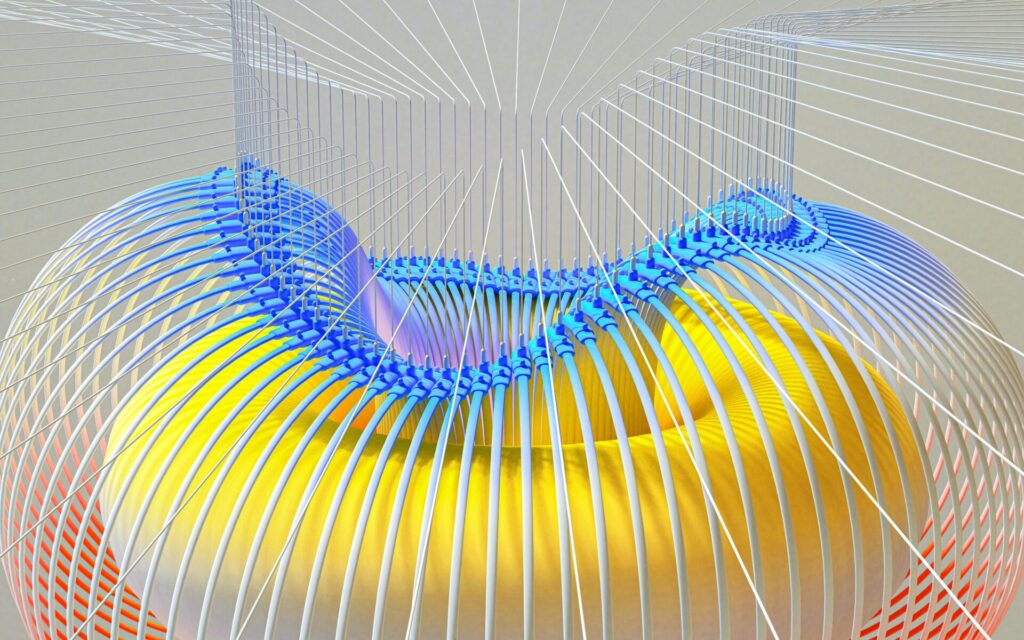
Even non-industrial professions are affected. Urban planners, teachers, researchers, and entrepreneurs increasingly rely on spatial visualization tools. As workplaces adopt these technologies, individuals without basic 3D skills risk being excluded from important conversations. Universality emerges not because everyone becomes an expert, but because everyone needs functional literacy.
Education and the Normalization of Spatial Thinking
Education plays a critical role in turning 3D modeling into a universal skill. As schools adapt to a world dominated by digital and spatial technologies, traditional boundaries between subjects are dissolving. 3D modeling naturally fits into this interdisciplinary landscape, connecting math, art, science, and technology in a single activity. When students learn to model, they learn to think spatially, logically, and creatively at the same time.
Unlike abstract equations or static diagrams, 3D models provide immediate visual feedback. Students can see the consequences of their decisions, making learning more intuitive and engaging. This feedback loop encourages experimentation, helping learners develop problem-solving skills and resilience. Over time, spatial reasoning becomes second nature rather than an intimidating specialization.
Educational institutions are also responding to workforce demands. As employers value adaptability and digital fluency, schools increasingly introduce tools that mirror real-world workflows. 3D modeling software is becoming as common in classrooms as word processors once were. This early exposure normalizes the skill, making it feel as fundamental as typing or basic coding.
Importantly, 3D modeling also supports inclusive learning. Students who struggle with text-heavy instruction often thrive when working visually and spatially. Modeling provides alternative pathways to understanding, helping a broader range of learners succeed. As education systems recognize this, they are more likely to integrate 3D tools across curricula, not just in specialized courses.
The Rise of Digital-to-Physical Workflows
The line between digital and physical reality is becoming increasingly thin, and 3D modeling sits directly at that intersection. Technologies like 3D printing, CNC machining, robotics, and automated construction rely on digital models as their source of truth. To shape the physical world, people increasingly start by shaping it digitally.
This digital-to-physical workflow changes who can make things. Individuals no longer need large factories or specialized machinery knowledge to produce objects. With a model and access to fabrication services, ideas can be turned into reality quickly and affordably. As this process becomes more common, understanding 3D modeling becomes essential for participation.
The implications extend beyond manufacturing. Architecture, interior design, and even hobbyist crafts now rely on models that can be tested virtually before materials are used. Errors are caught earlier, resources are saved, and experimentation becomes safer. Modeling becomes a form of thinking ahead, reducing risk and increasing confidence.
As these workflows spread, they influence everyday problem-solving. Need a replacement part, a custom tool, or a unique solution? Modeling it becomes faster than searching for a generic alternative. Over time, people internalize this approach, seeing 3D modeling as a practical life skill rather than a professional specialty.
Communication, Collaboration, and the Language of the Future
Perhaps the most profound reason 3D modeling will become a universal skill is its role as a new form of communication. Words and images are powerful, but they often fall short when describing spatial ideas. 3D models bridge that gap, allowing people to share complex concepts with clarity and precision. They function as a universal visual language.
In collaborative environments, models reduce ambiguity. Instead of interpreting descriptions differently, teams can point to a shared representation. This is especially valuable in global and interdisciplinary work, where language barriers and cultural differences can complicate communication. A 3D model conveys intent directly, minimizing misunderstanding.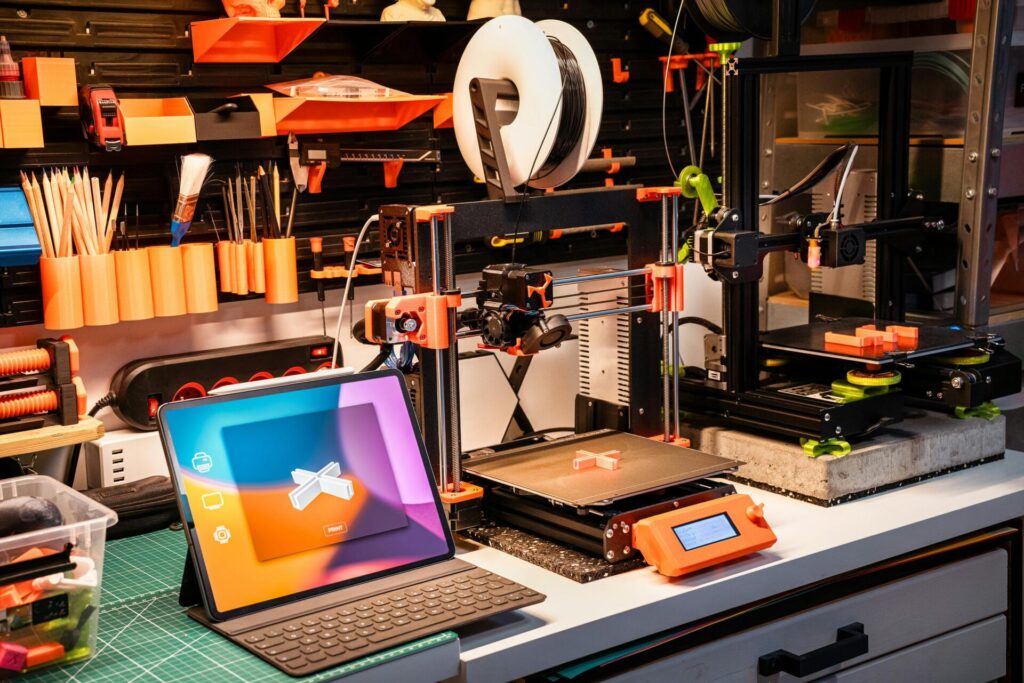
As remote collaboration becomes standard, this advantage grows. Virtual meetings increasingly involve shared 3D spaces, interactive prototypes, and simulated environments. Participants who can navigate and modify these models contribute more effectively. Over time, this expectation spreads, making modeling literacy a baseline requirement for meaningful participation.
Beyond work, 3D models influence how ideas are shared publicly. Education, journalism, and storytelling increasingly use interactive visuals to explain complex topics. People learn not just by reading, but by exploring. Those who can create such experiences gain a powerful voice in shaping understanding.
Ultimately, universal skills emerge when they become essential to communication. Writing spread because it allowed ideas to travel beyond memory and speech. Digital literacy spread because it enabled participation in modern society. 3D modeling will spread for the same reason: it allows people to express and share ideas that words alone cannot capture.
As the world becomes more spatial, interactive, and digitally connected, the ability to think and create in three dimensions will no longer be exceptional. It will be assumed. 3D modeling will not replace other skills, but it will join them as a foundational tool for understanding, creating, and communicating in the modern world.